
The oldest reference to Pudding à la Rachel I have been able to find is an 1855 reference in the journal The Musical World, the dish reportedly being offered in a Broadway dining house that year for the first time. It was named after a French actress, Elizabeth Félix, known professionally as Mademoiselle Rachel, following a tour that took her to New York in 1855. Such was her fame that her name started cropping up everywhere in New York that year. You could have your hair done à la Rachel in the first, but definitely not the last, moment of celebrity-driven fashion associated with that name.
Eight years after Mlle Rachel’s death from tuberculosis, the wonderfully titled 1865 cookbook, How to Cook Apples; Shown in A Hundred Different Ways of Dressing That Fruit contains a recipe for Pudding à la Rachel. The recipe differs slightly – the apples are shredded rather than chopped, ‘grocer’s’ currants rather than sultanas are listed, as is the rind and juice of both lemons. The cooking time is reduced to 3 hours and the sauce is specified as a ‘wine sauce’.
A further mention of Pudding à la Rachel is found in the 13 February 1891 copy of The New Zealand Mail as part of a special on apple recipes, with wording very similar to that in the instructions transcribed below, though 4 eggs is suggested rather than 3, and a whole teaspoon of cinnamon or nutmeg but not both. Here, a wine sauce is also recommended. Clearly this recipe had found a quiet place in gastronomy as a handy standby to use up apples.
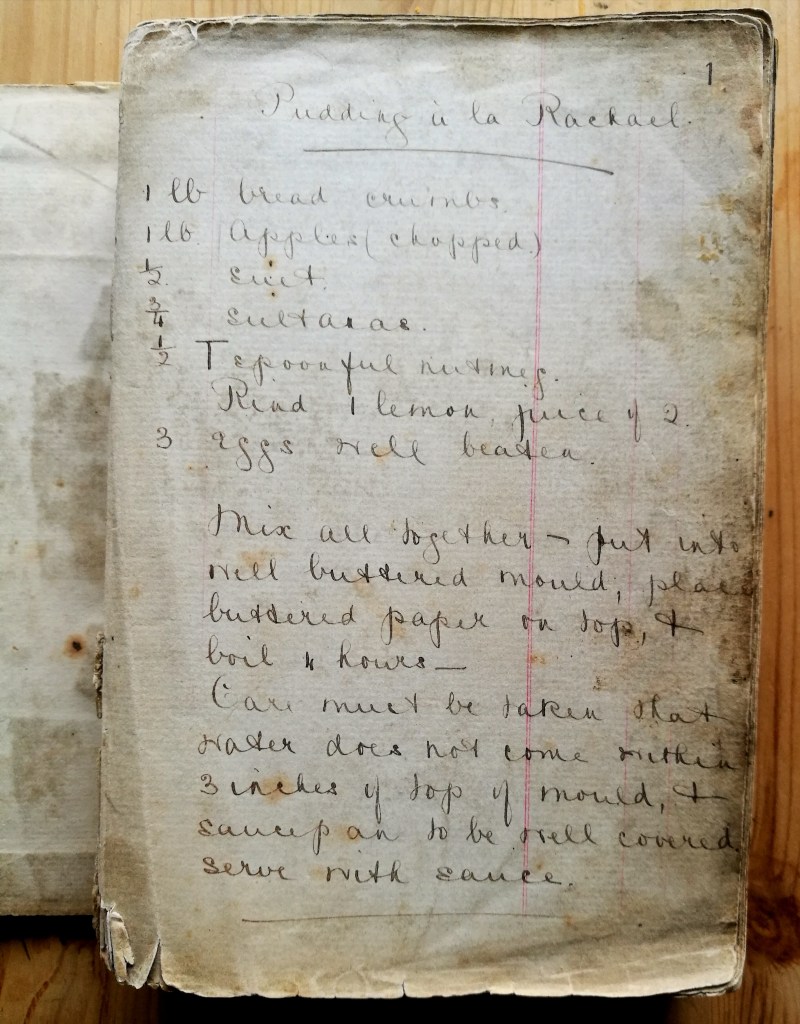
In fact, despite the glamour suggested by a treat developed on Broadway to honour the visit of a French stage celebrity, the ingredients of this boiled pud are what you might find in the larder of any household of the period, or indeed at the time this recipe book was begun (in or prior to 1907). By the 1850s, around 300 million oranges and lemons were imported to England yearly, according to Mayhew’s London Labour and the London Poor. Domestic production would have made lemons even cheaper and more widely available in the US.
One can view this dish as something of a standby, simple everyday fare, requiring no special or expensive ingredients. Nevertheless, for one or perhaps all the above reasons, this recipe was enough of a favourite to be given the distinction of being the first listed in this collection, in the hand of the first contributor.
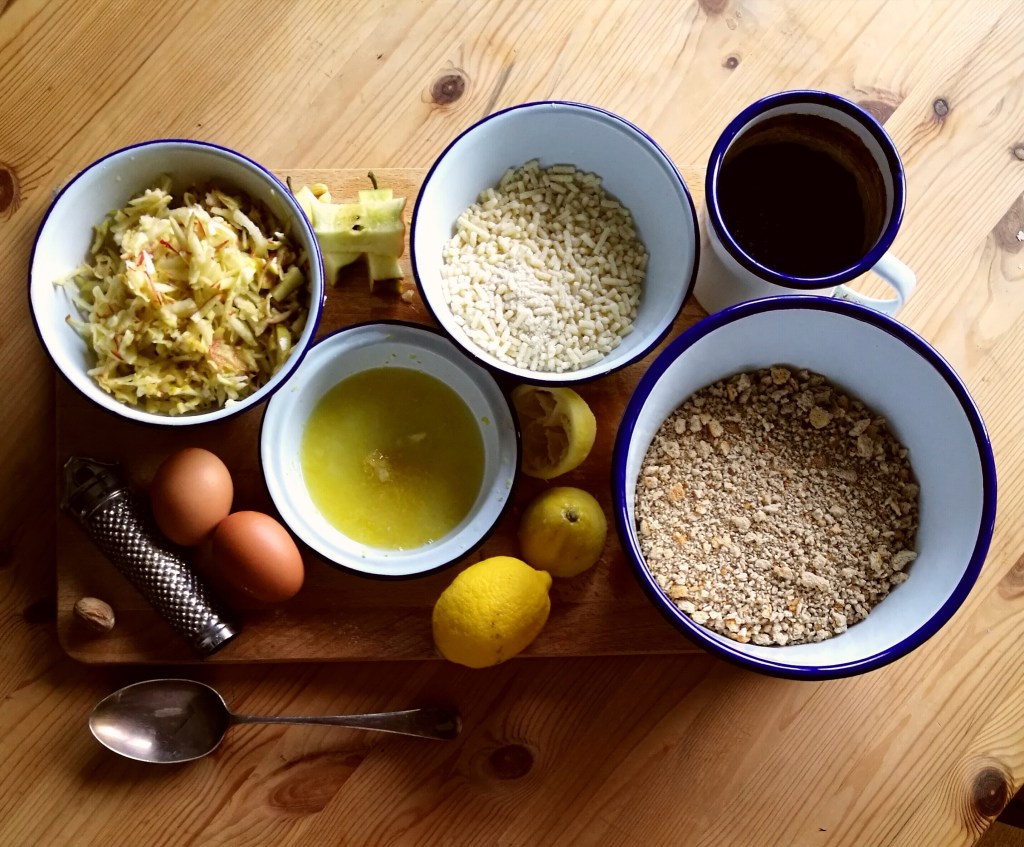
Original Recipe (modern weights and measures given)
1 lb (454g) bread crumbs
1 lb (454g) apples (chopped or grated)
½ (227g) suet
¾ (340g) sultanas
½ teaspoonful nutmeg
Rind (zest) 1 lemon, juice of 2 lemons
3 eggs well beaten
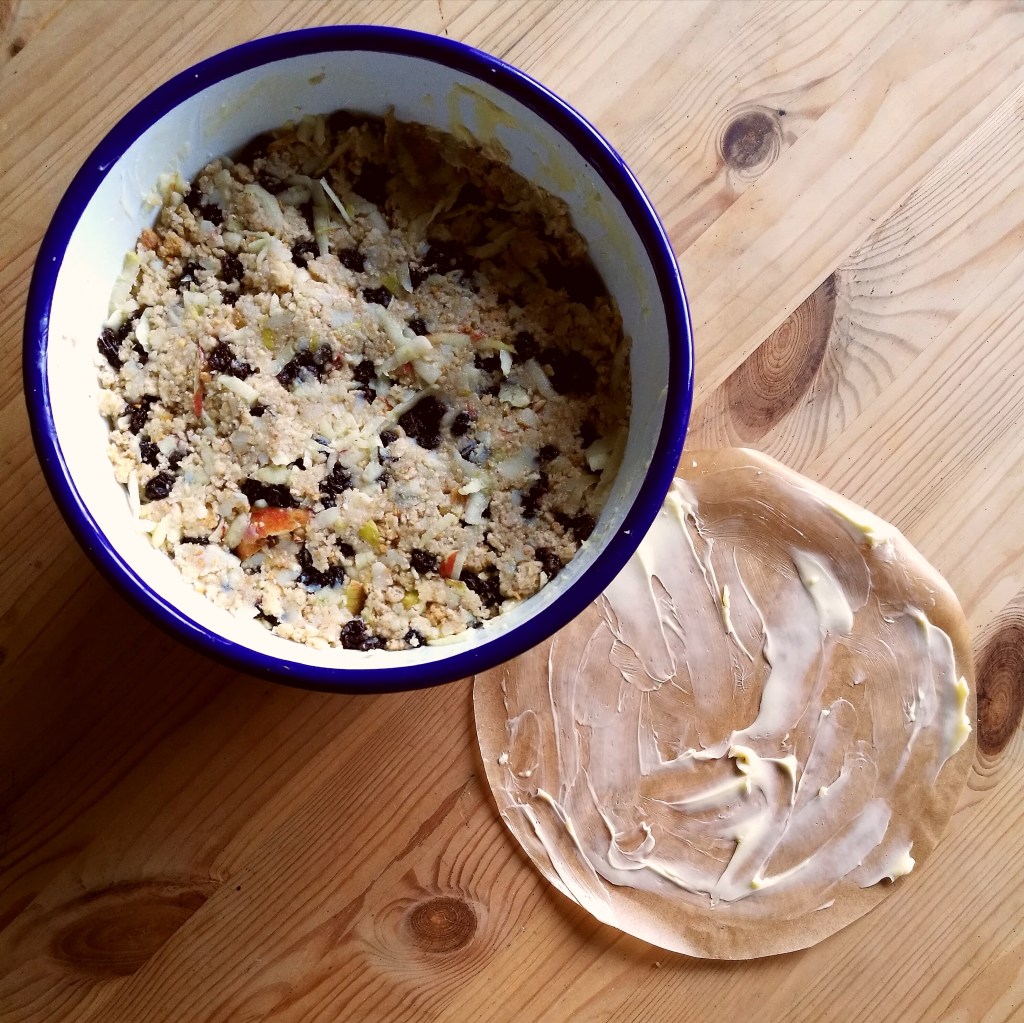
Mix all together – put into well buttered mould, place buttered paper on top, & boil 4 hours – Care must be taken that water does not come within 3 inches of top of mould, & saucepan to be well covered. Serve with sauce.
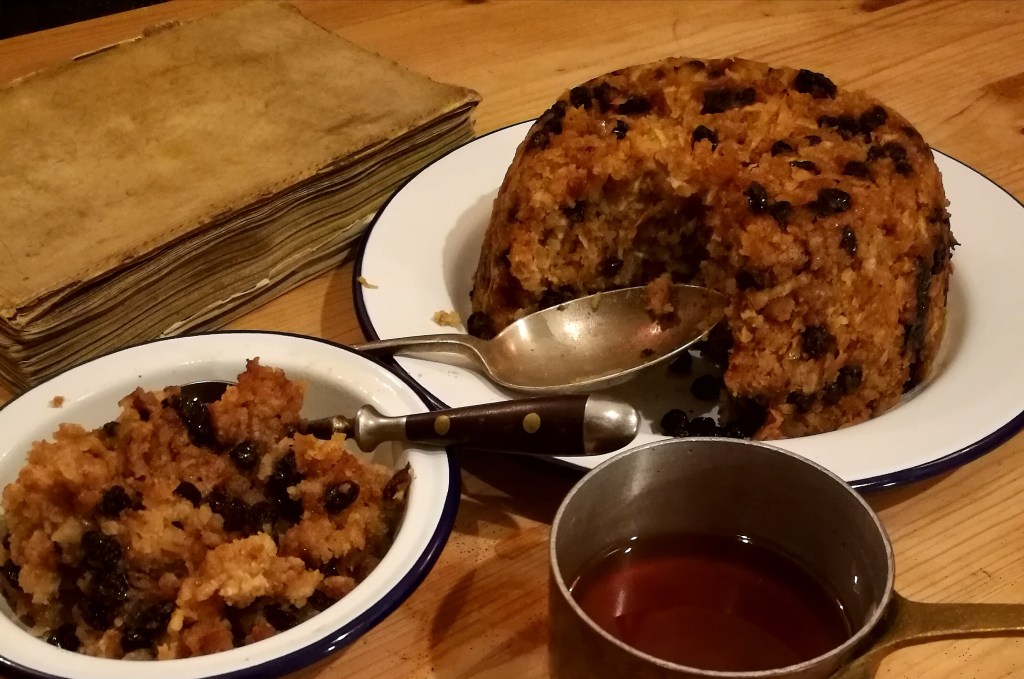
A Victorian wine sauce recipe
140ml of water
30g of caster sugar
A squeeze of lemon juice
2 tablespoons of apricot jam
A glass of sherry or claret
Combine ingredients in a small saucepan until combined. Spoon over the pudding at table.
Cook’s notes
I made half a recipe which was enough for an 8” diameter pudding basin. I used currants, because that’s what I had (in a nod to thrift), a good half teaspoon of nutmeg, the juice and rind of one lemon, half a pound of white bread crumbs, half a pound of grated apples, a quarter pound of shredded beef suet (Atora) and two medium size eggs. The mixture was not too wet and pressed well into the buttered basin. It was easy to seal the surface with a piece of buttered baking paper pressed to the sides of the basin a little. I steamed the pudding, covered, for 2 3/4 hours but could have gone for less.
It felt very odd not having sugar or salt in the mix. If it weren’t for the suet I’d have suggested this was a very healthy recipe. The sauce, however, is not essential to the enjoyment of this pudding. By itself the cake is moist and very flavourful, fresh with lemons and apples and deeply sweet with the dried fruit. I don’t miss the extra sweetness or the salt. If you are looking for a lighter, easier alternative to a Christmas pudding, this may well be it. The sauce is a real treat on top however, and pairs beautifully. I used sweet cream sherry in mine, and an extra one in a glass alongside.
 Grounded History