
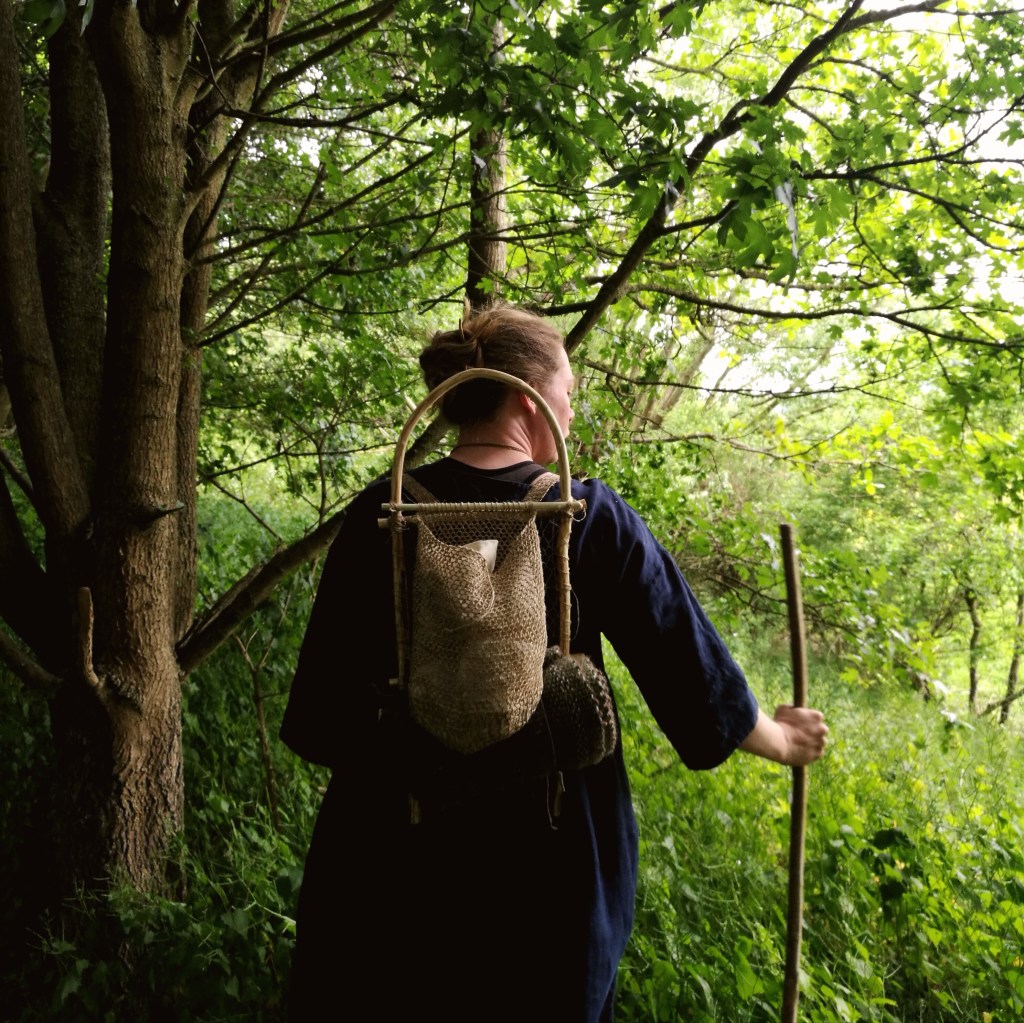
Of all the ‘historical’ goods I have made over the years, the object I am most proud of must be the hazel frame pack that I started making in February of this year and didn’t complete until June, though ‘complete’ is a bit of a misnomer as I have tweaked and fiddled with it regularly since.
I recall its birth well. Train disruption had put an end to my hopes to visit West Stow Anglo Saxon Village that day, and so I went foraging instead. I must have been in a particularly historical frame of mind, though that usually describes me. It was a beautiful day – one of those sunny and warm late winter days that make you hopeful for spring, when the earliest blossom is just starting to peek.
There is a place near me that used to be a dump, for many, many years until the mid-90s when nature and a team of invested locals decided that it needed to be reclaimed. Now, rabbits burrow into embankments stuffed with Victorian glass. They carve out treasures with every new tunnel. Above ground, species variety is improving. The soil is thin and a bit starved still, but there are beautiful open meadows crisscrossed by well-established hedges and a few thickets of native hardwoods. I come here often, in all seasons, willing to learn what the land has to teach.
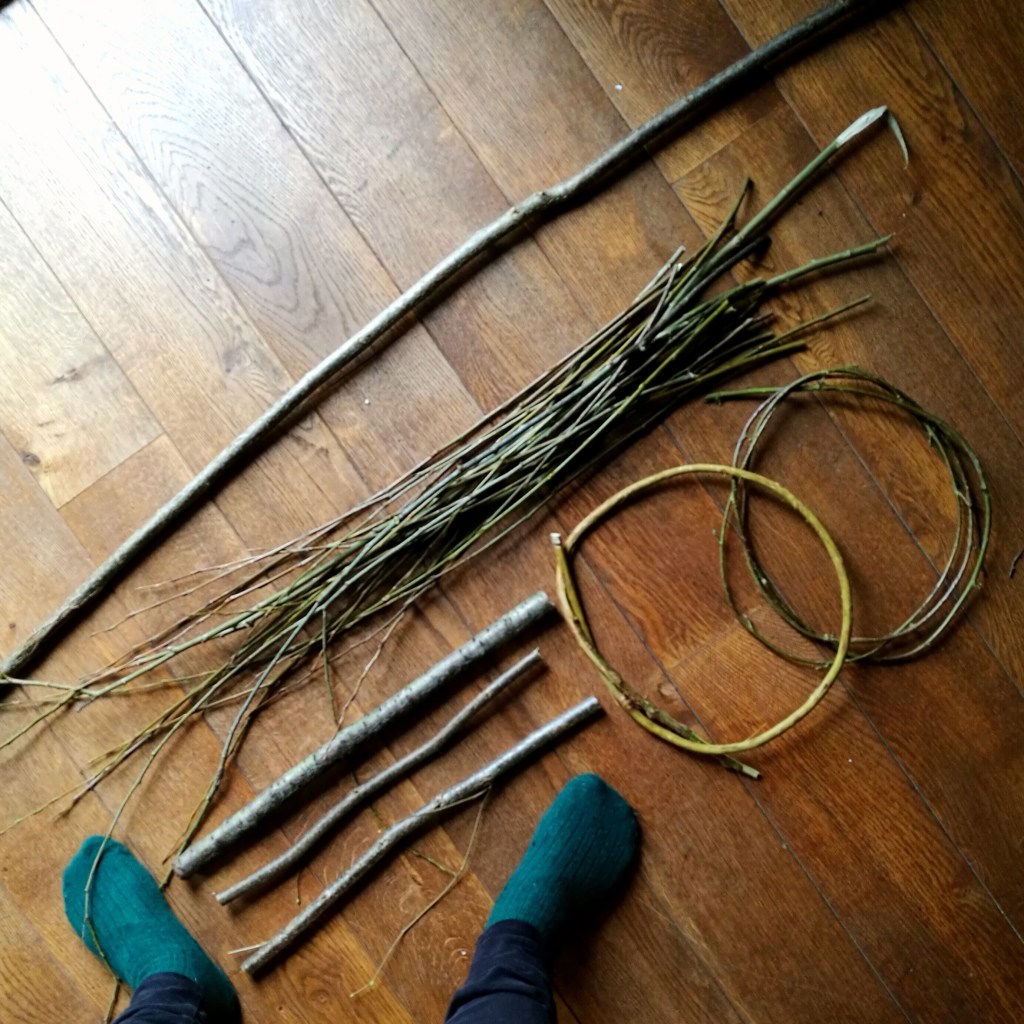
I didn’t expect to start work on a frame pack that day, though I’d been researching Ötzi the Iceman and his fabulous collection of possessions just the previous day, so the idea didn’t come out of nowhere. What happened was, I saw the hazel: Warm brown and with an unmistakable sheen, it was peeking between field maples and hawthorn. I had an apple in my bag. I traded it for a long, straight sucker stem that was deeply embedded, snaggling many other canes in their race to the sun. A bit of thinning would be good for the tree, so I took out my pruning saw. A few paces away, some windfall cherry caught my eye. Ötzi’s pack had thin larch-wood boards keyed into slots at the side of the bent hazel pole that made up the larger part of his carry frame. Mine would be a simpler affair, as I intended to lash the crosspiece to the frame.
I took these, and a few other bits and pieces home, ready for an afternoon of making. The hazel pole needed stripping of its bark – an easy task in the early spring, and soaking in hot water to encourage it to bend. The fibres of the young wood did want to split a little, and the resulting frame is flattened across the top as a result of some of the outer layers of cambium peeling away, but the frame is very strong regardless.
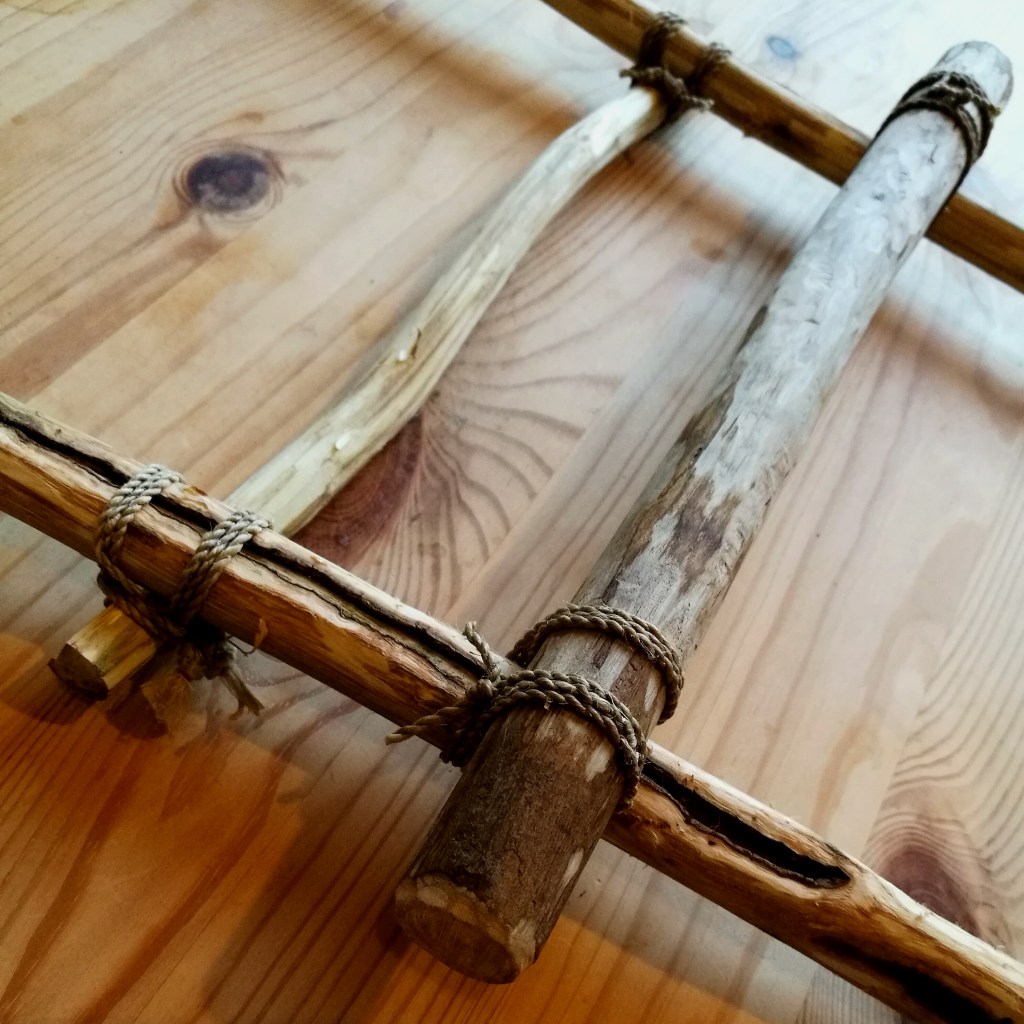
After an hour or so of soaking in very hot water, I used string to pull the two ends together until the sides were parallel. I used my knee and good old-fashioned eyeballing to encourage the bend across the middle to be even. I figured the more I could do that would keep tools simple and the majority of the work in my own hands, the closer I would get to the spiritual truth of the project.
While the frame dried, I got to reading. The frame pack didn’t survive complete and it is surmised that it may have included a net bag to carry his possessions in, including the famous birchbark containers used to carry charcoal and other goods. The pack may instead have had a hide bag, but so much of what he had was made beautifully out of handmade twine, I liked the idea of a net bag.
This is where I feel the need to stress that I was not trying to recreate Ötzi’s pack. I wanted to be inspired by it, and use my traditional skills to make the components of a pack that wouldn’t be out of place in the prehistoric world, or indeed in the context of the many world cultures that still see value in being able to use local materials and traditional skills to make similar carry systems today. I have been an avid backpacker, long-distance walker and wild-camper for many years. There were things about Ötzi’s pack that struck me right away as excellent design, regardless of time period. If you are walking high in the mountains for long stretches over uneven terrain, as Ötzi was, you want something small, lightweight and practical. Ötzi’s pack was large enough just to carry the essentials, and all his possessions were, to use a modern outdoor pursuits term, ‘ultralight’. He may have been (unsuccessfully) running for his life, so it makes sense that he carried so little, that he left precious, heavy, and breakable pottery at home, etc.
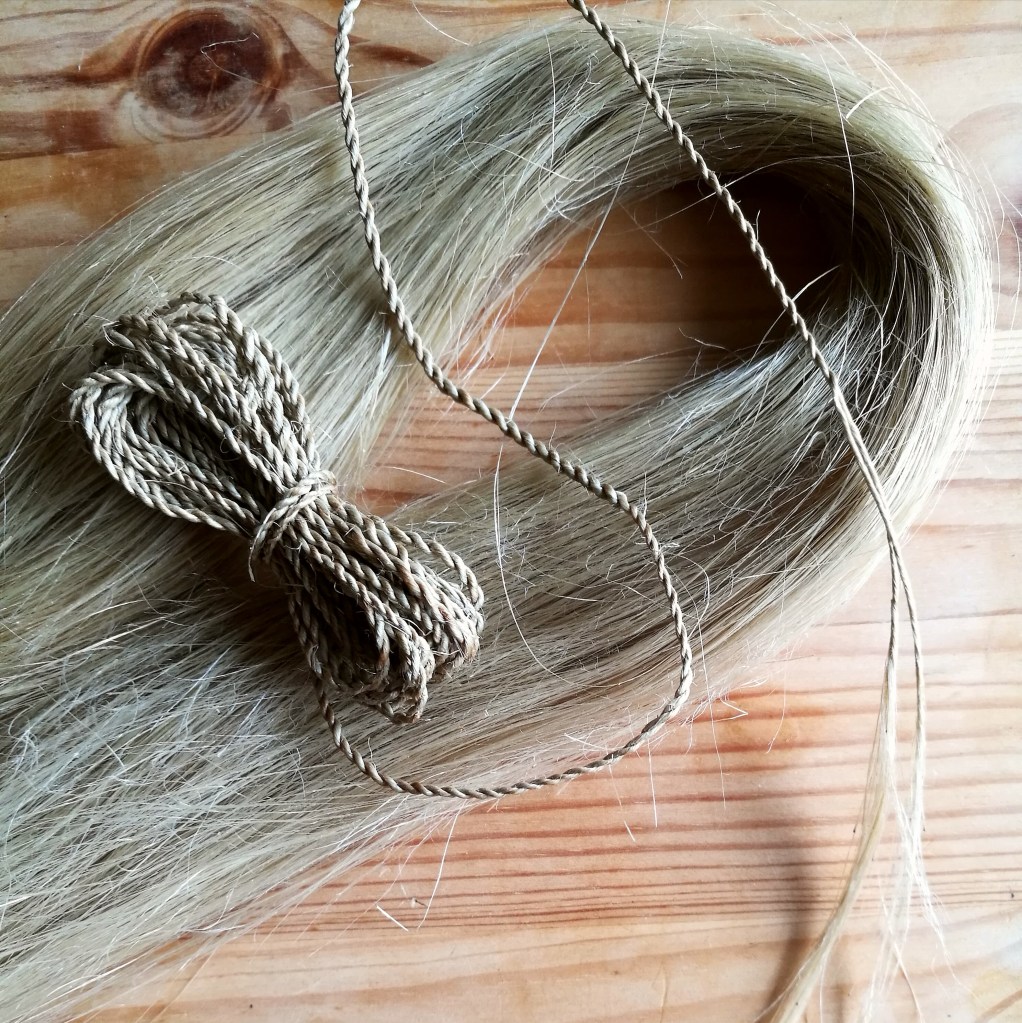
A net bag made sense in this case – super light, flexible, and quick to dry. Plus you can see where everything is. I had a good hank of partly-processed flax fibre in my stash. Knowing that it would take a large amount of twine to loop a bag big enough to make sense on this frame, I got to work. I didn’t keep track, but I figure that it must have been about a hundred hours of work to make the twine for the various string elements of the pack. It might be more.
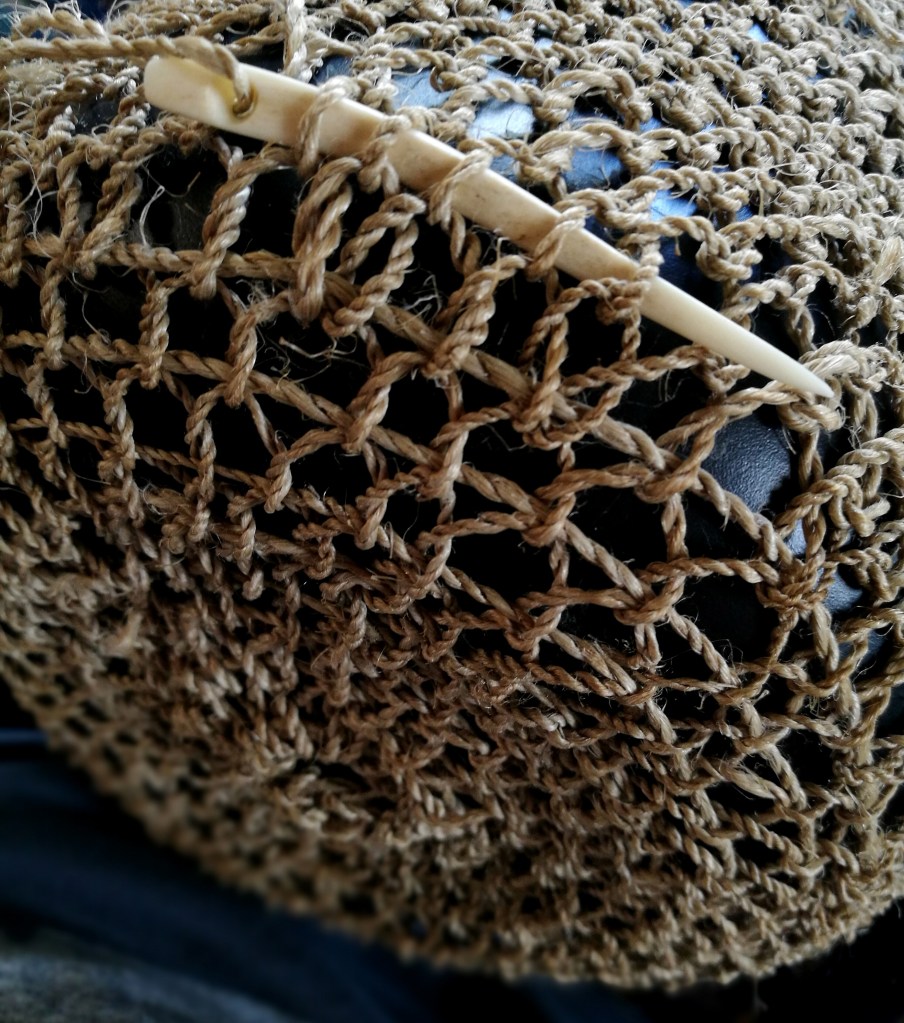
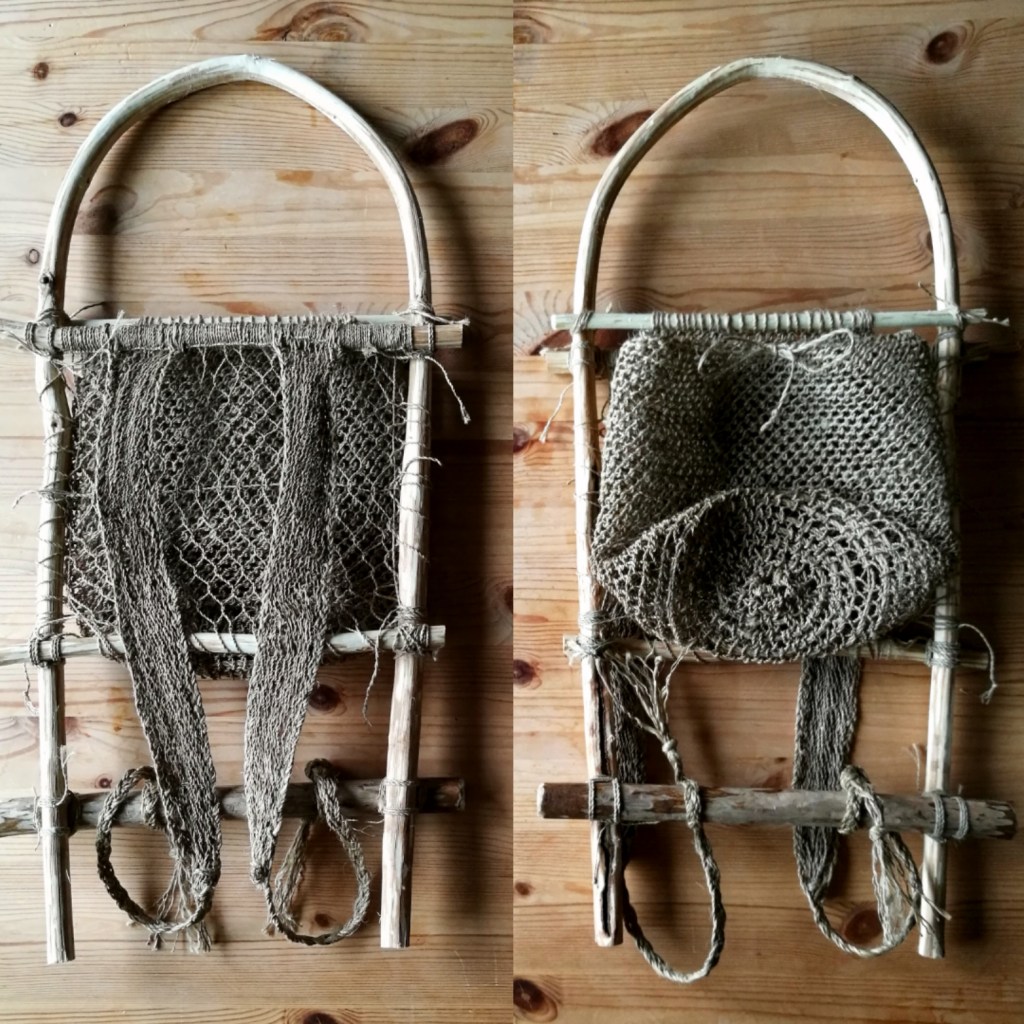
There are four distinct prehistoric fibre crafts in use on this pack, besides the twining itself: Sprang, looping (the earliest ancestor of nalbinding, or needlebinding), looping around a core, and braiding.
I used another snowshoe-like frame to act as a sprang loom on which the two shoulder straps were made. I took time to think about how I wanted to do the straps (leather being obvious, but I was determined to make all element of this pack vegetal), and landed on sprang because it, well, springs. The web will stretch to be broader over the shoulder to add comfort, while narrowing under the arm for ease of motion. The straps are a combination of hand-twined flax and lime bast for added strength. Sprang was also used to make a net that would fill the square space in the middle of the pack frame, to stop the bag and whatever else was tied to the frame from falling through against my back while carrying.
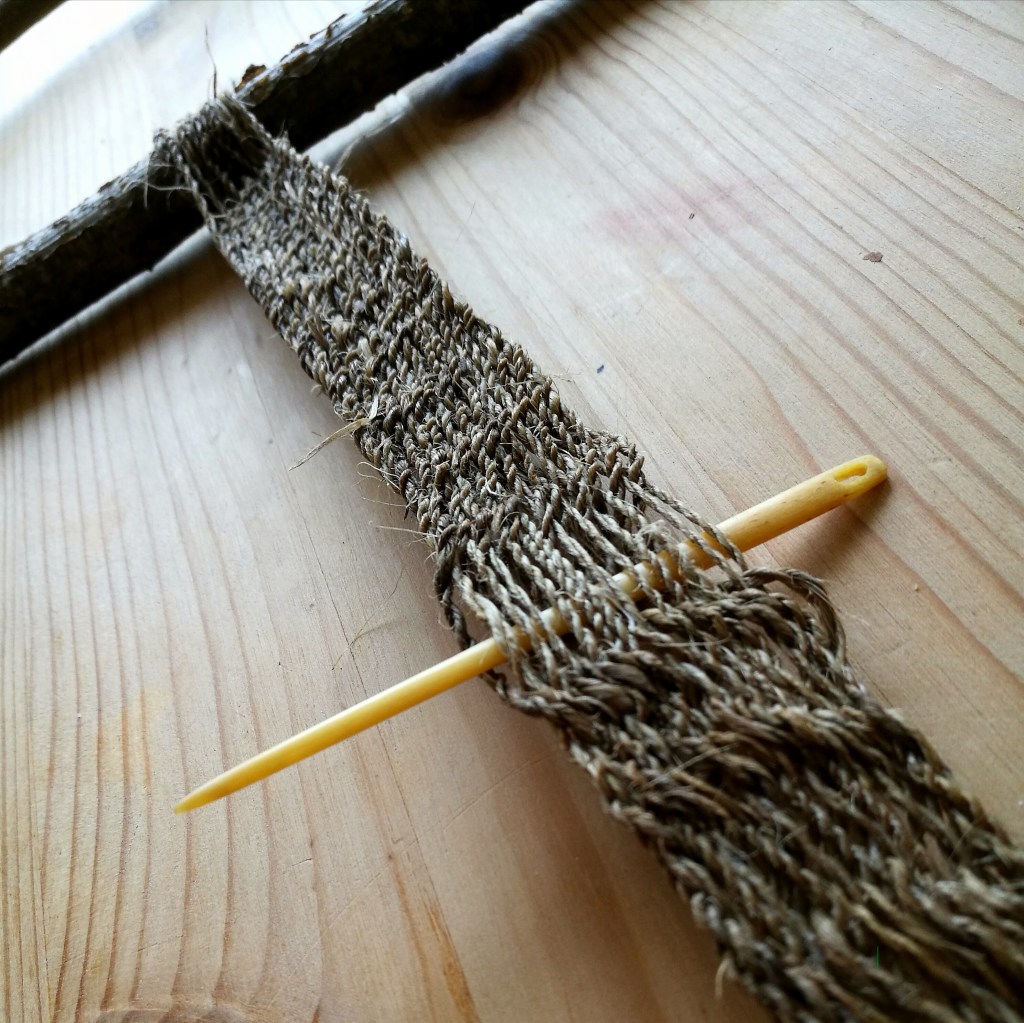
The bag itself is a combination of looping and looping around a core – used in the base to provide extra rigidity and strength, and to close up holes so that no small articles could accidentally slip out. The pace of looping, done with a handmade antler needle, is slow enough to let you think through what you want to accomplish. As such, I was able to tighten up the weave towards the bottom of the bag where the ends of tools, etc. might want to poke through. I kept it looser at the top to help with flexibility. Many (many) a pleasant afternoon and evening hour was spent quietly making twine and looping. I liked to make about 12 feet of twine at a time to add to the bag as it grew, measuring it against the frame until it sat comfortably between the top crossbar and the bottom one. The final row of looping incorporated a rod that would be fixed to the top of the hazel frame (loose enough for easy removal of the bag from the frame). A simple length of twine became the closing tie.
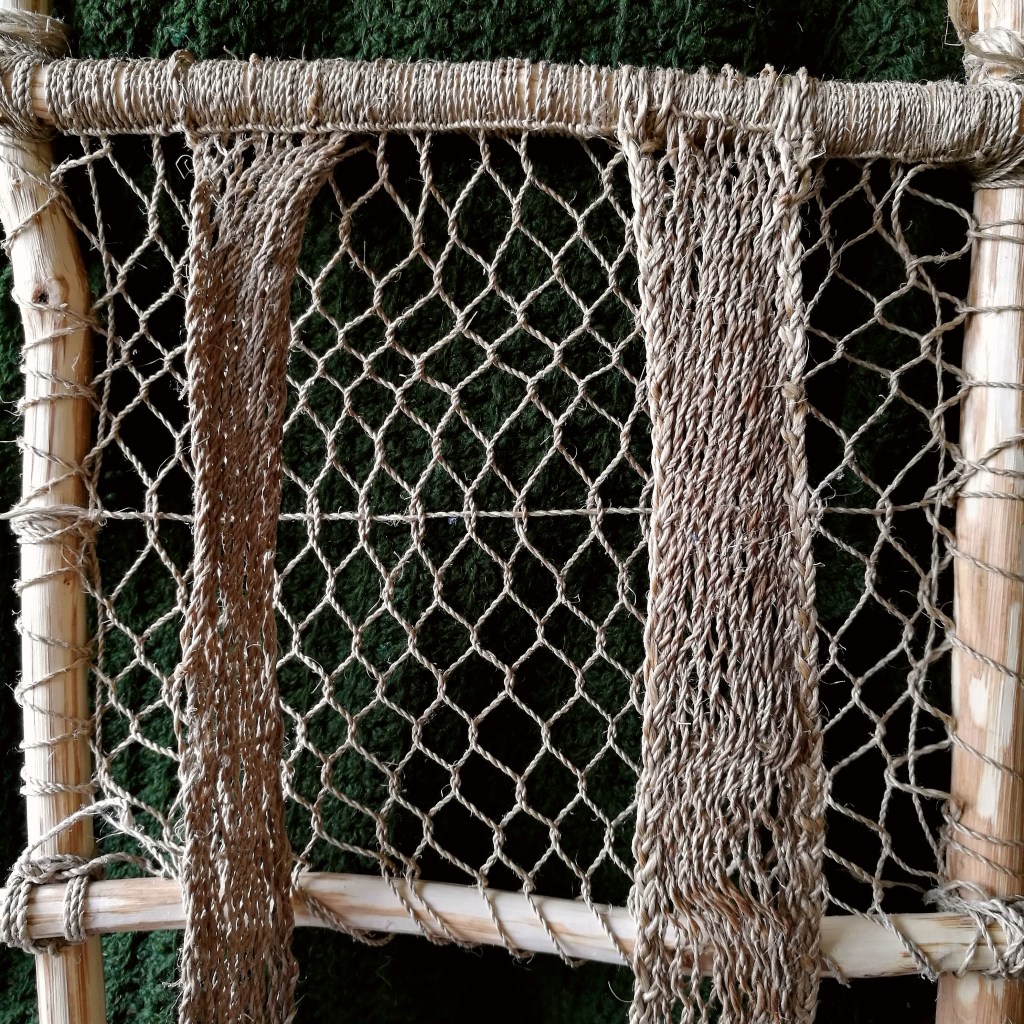
At this point, all that was left was to put the thing together. Plenty of extra twine was needed to tie the various frame pieces in place, as well as the other flax elements, such as by whipping around the entire top cross bar to fix the straps and the sprang back net in place. Still, this all had to be hand made by me.
After the first carry, I made the main adjustments, as I like to imagine Ötzi would have done at a less fraught time in his life, when he (or someone in his community) first made that remarkable pack that survived in a recognisable form for 5000 years. I strengthened the shoulder straps by applying a braided edge down all sides, and made the bottom parts of the straps more substantial, for ease of sliding the pack on and off. I also fixed the net bag in place a little better to stop it flopping around with a load in. I also shortened the ‘feet’ of the frame by an inch or so, to stop getting poked in the hips while I walked.
Since then, it has required just minor adjustment, tightening a lashing here and there, and keeping it out of the damp. I’ve treated the wood with cedar oil to help keep it mildew-free.
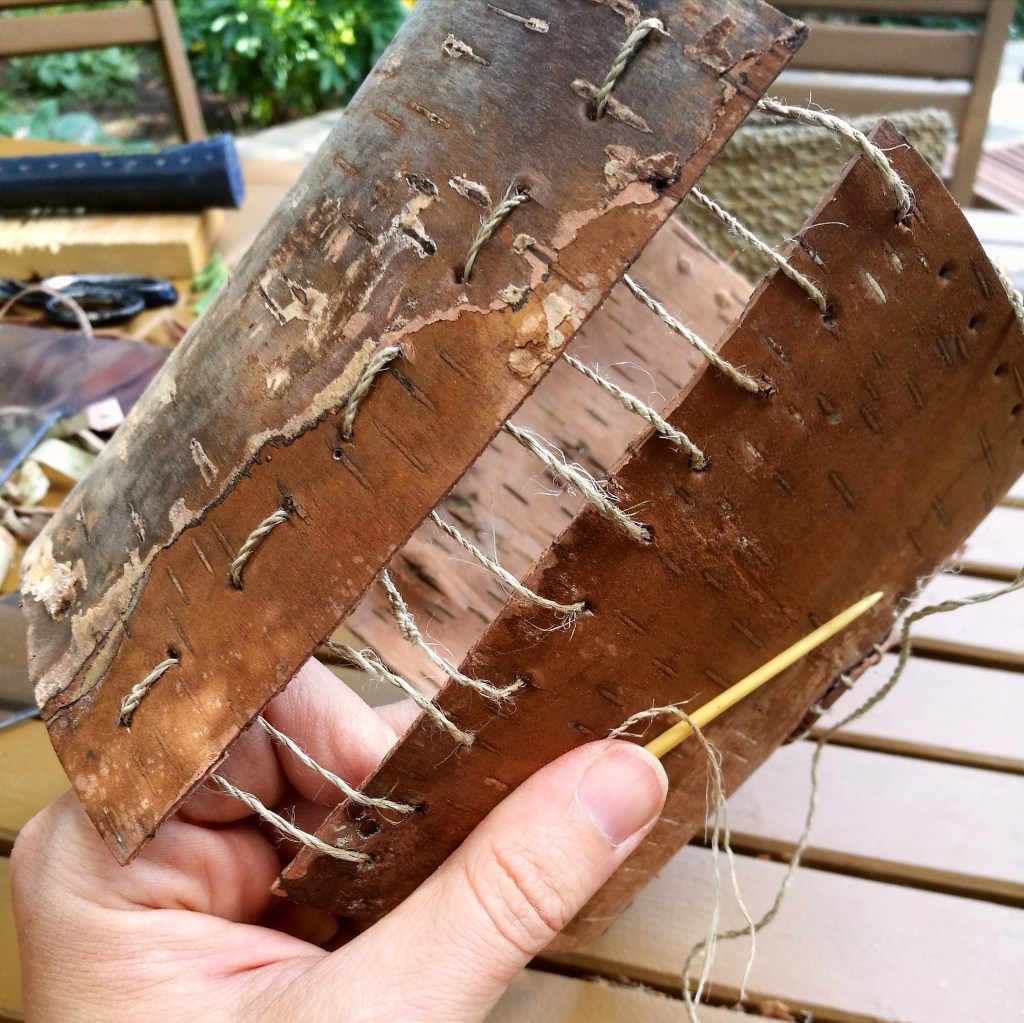
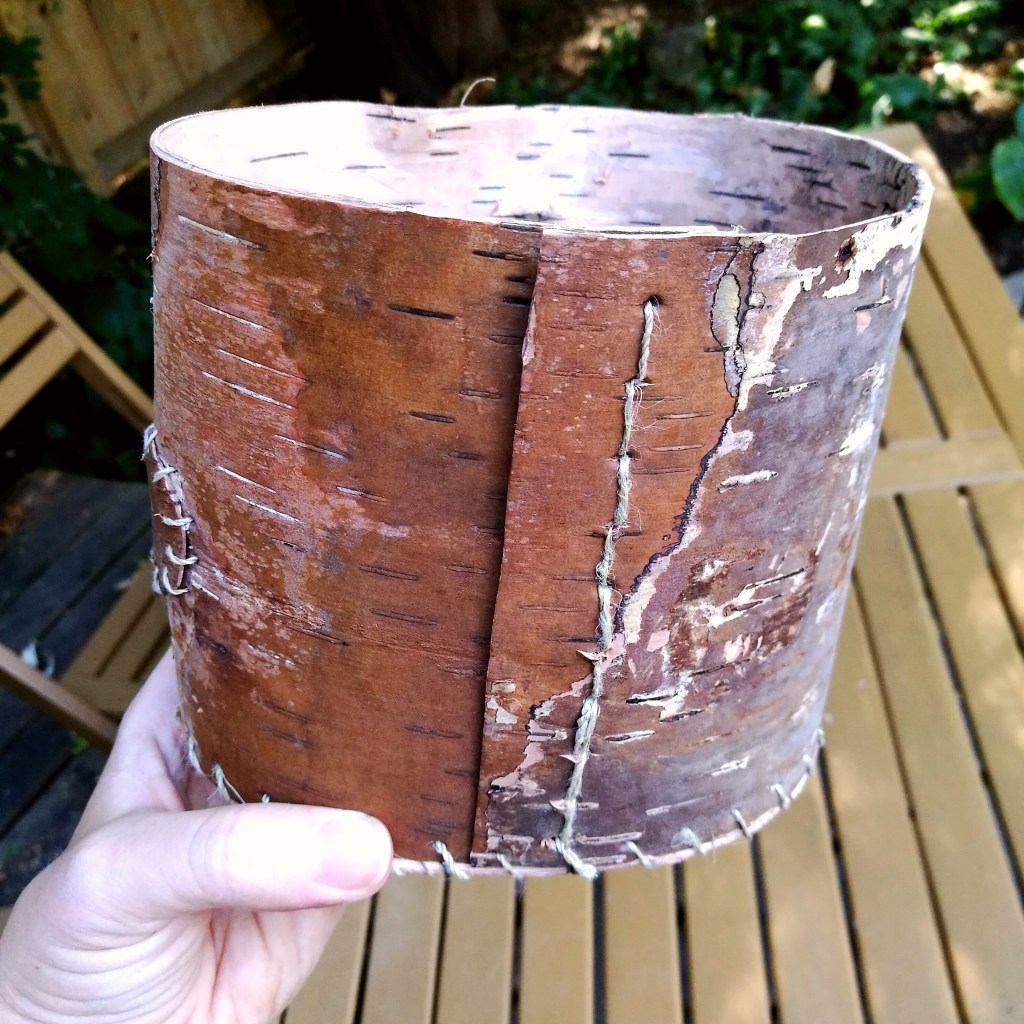
This summer I made a birch bark container, again using hand-plied twine as well as bark from dead fall birch near home. It’s a remarkable material to work with – so like leather in its pliability and strength, so long as you respect the grain of the fibre. It makes a perfect insert into the mesh bag in which to carry your worldly possessions. I’ll do another post on this process, if you like.
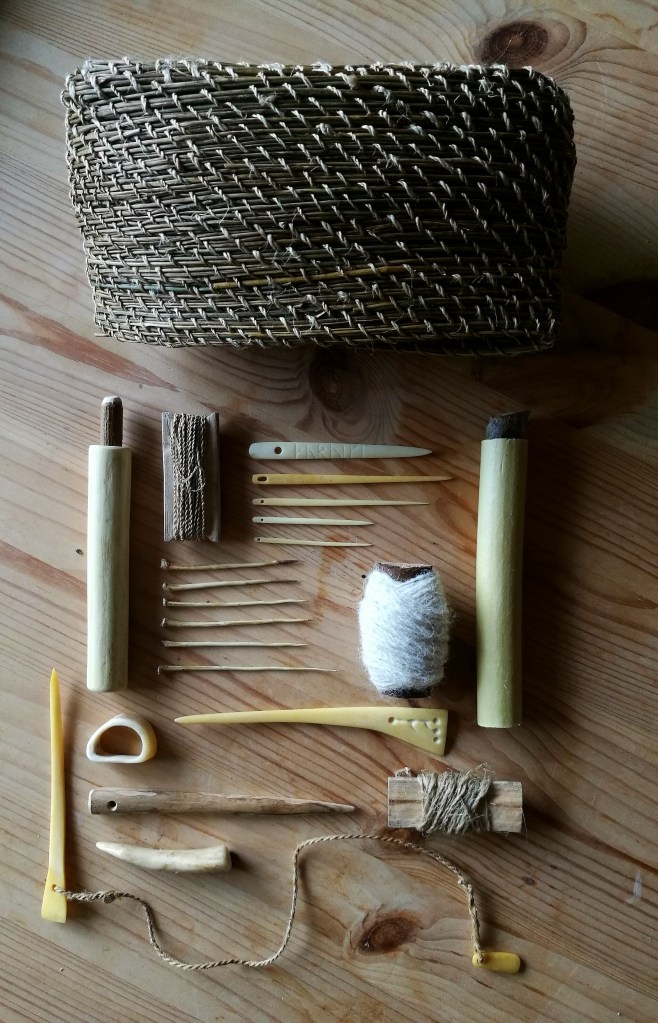
Currently, I use the frame pack to hold everything that I’ve made under similar principles – a lipwork rush basket, for example, containing an entirely handmade and organic sewing kit, bits of flint, a handspun and handwoven shawl, shells full of pine pitch glue, dried birch polypore and chaga mushroom, again in a nod to Ötzi and his medicinal kit. It’s an easy item to fling over a shoulder to take to teaching venues, but keeping it all together has another purpose. Should disaster strike, it’s an easy way to make sure these precious things – representing hundreds of hours of work, rather than richness of materials – can quickly and easily be saved from destruction. Yet, it gives me a moment of quiet reflection when I remember that under most circumstances, these precious items wouldn’t last more than a year or two if left out to rot. There would be no trace of the materials or the skills used to create so many things of daily practical use. This is very much what draws me to this kind of skill and this kind of material – knowing that 98% of the material culture of our ancestors leaves no trace in the archaeological record.
Can we learn something from this? About self-reliance? About what constitutes value? About living resourcefully, locally, and sustainably? I think so. How about you? Leave your thoughts in the comments. All are welcome.
 Grounded History