
The girl in the polkadot coat peeked into the case. I observed her eyes roam over brittle rods, wooden discs, dusty clouds of wool. ‘Mummy, are they toys?‘ she sang, fogging the glass. Her mother, attention elsewhere, said she thought they might be before drifting onwards through the gallery.
Imagine a museum cabinet of the future, which houses the contents of your desk: coffee cup, pen, phone. Imagine your great-grandchildren passing this display, lost as to what the objects are, or how central they were to your day-to-day life.
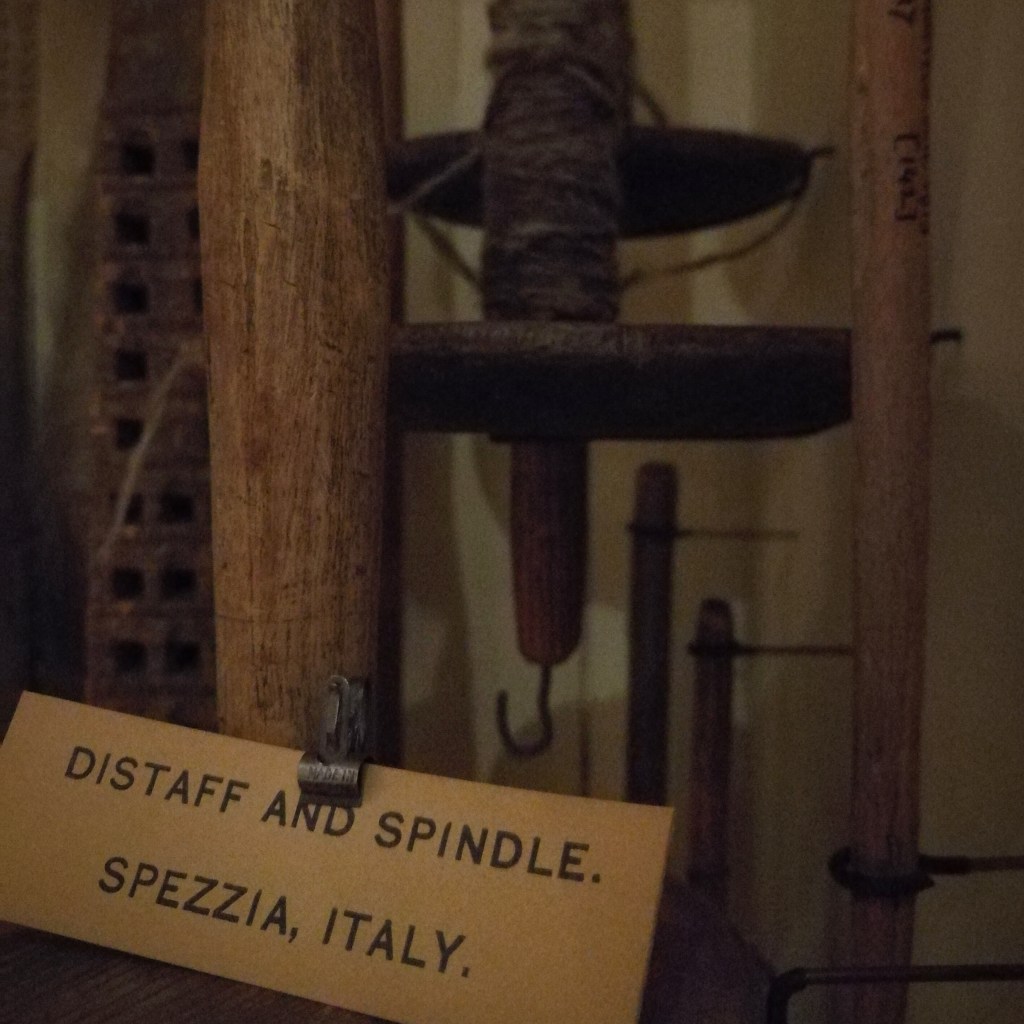
At moments like this, the gulf between our lives and those of our recent ancestors is made apparent. The case, at the Pitt Rivers Museum in Oxford, contained timeworn spindles and whorls – tools of cloth production that would have shone in their heyday.
I enjoy myself every time I see spindle whorls in a museum. Today in the West we encounter few references to ‘spinning’, except perhaps in renditions of Sleeping Beauty or Rumpelstiltskin, though precisely what those ill-fated heroines were doing is quite lost on most people. When spinning is demonstrated, it reveals how jawdropping an achievement early textile production was; the typically brief explanation offered alongside museum display cases leaves us none the wiser.
The girl in polkadots therefore must be forgiven for calling them toys, especially as they share many characteristics with tops – playthings which practised the hand in preparation for a lifetime of spinning. Like a top, whorls can be as simple as a lump of clay or a disc of wood through which a rod – the spindle – is fixed. There are also beautiful whorls, in precious stone, glass, bronze, silver, and ceramic. Whorls occasionally speak to us out of the past. A Viking Age favourite of mine (see above), held by the National Museum of Iceland, has ‘I belong to Thora’ scratched into its surface. We know nothing of Thora, but that her spindle whorl was a proud personal possession, voicing its place in the household.
Archaeology has not yet been able to identify the origin of spinning as a human endeavour, though depictions of string garments exist from the Upper Paleolithic (20,000 years ago). Once thread was produced in the quality and quantity needed for weaving, some time in the late Neolithic, we can arguably state that humans entered the modern era.
It’s hard to overstate the centrality of spinning to human life and culture across the globe and across time. Considering that for the vast majority of traceable history, spinning was predominantly a female craft, we must view women’s history and spinning as firmly intertwined at the core of civilization.
Spinning continued as an essential home craft in the vast majority of cultures around the world, first with hand-spindles and then, from about 1030 in the Islamic world, using spinning wheels. Even after the Industrial Revolution transformed cloth production from the mid-18th century, handspinning continued across Asia, Africa, South America and in pockets of North America either as a subsistence craft or, in the famous case of cotton spinners in India, at the urging of Mahatma Ghandi in 1931, as a form of political action and cultural rebellion.
Around the same time, spinning could be seen in homesteads across my own country. Canadian Production Wheels, or ‘Quebec Wheels’, are now a highly sought-after antique. The Borduas family, the last traditional Quebec wheelmakers, who had produced as many as 52,000 wheels over the previous 80 years, closed shop in 1954 due to dropping demand. Yet their peak year had been 1920 – just 34 years earlier – when they shipped 1000 wheels to new owners. Despite the vast majority of cloth then being produced mechanically, handspinning remained an important rural craft well into my own parents’ lifetime. This isn’t the dim and distant past.
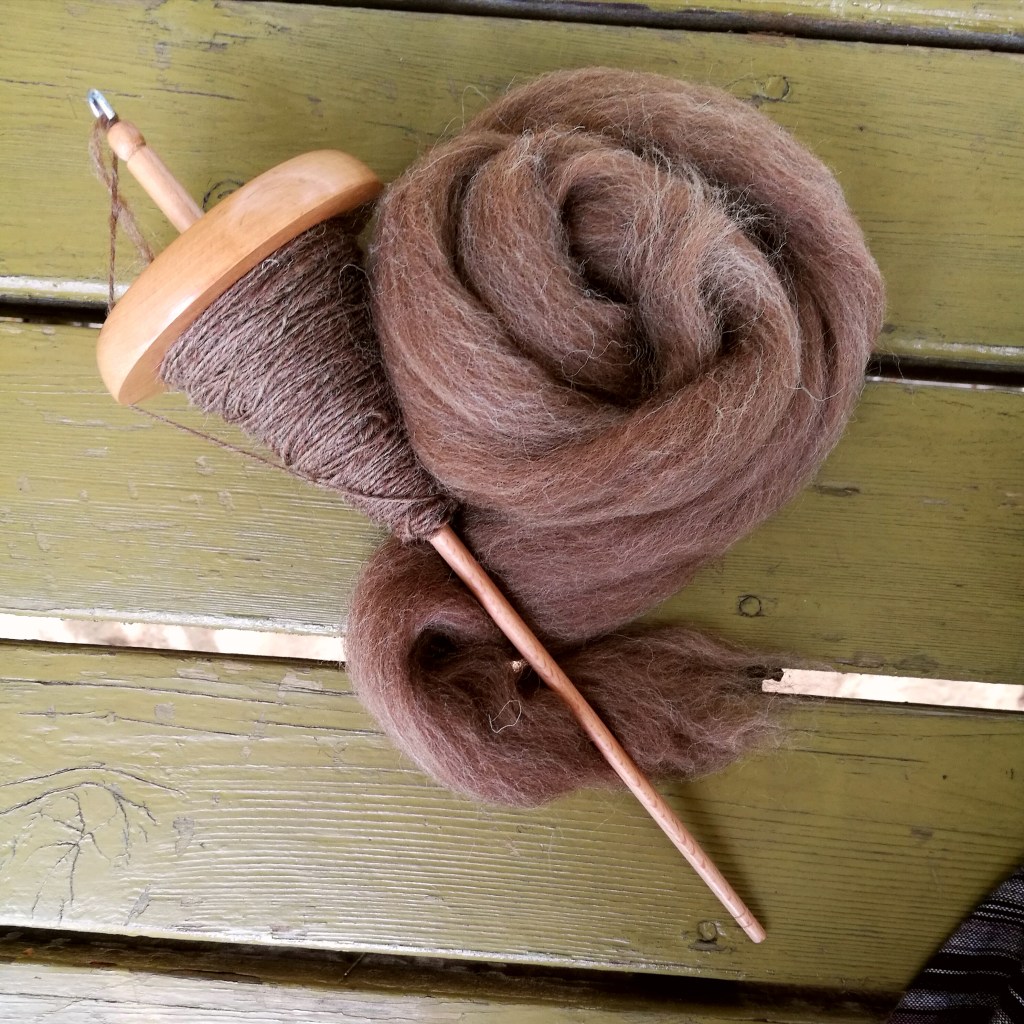
I was first taught to spin, as a homesick and underfunded graduate student, over tea and conversation by a lifelong enthusiast one rainy November night in Edinburgh, 2008. It spoke to something in my bones and since then I’ve produced hundreds of kilometres of yarn that has been worked into jumpers, scarves, blankets, socks, mittens, hats, and a dozen other things by myself, friends and family. It’s a thoroughly satisfying craft to undertake and to share with others. There’s nothing more soothing than the subtle weight and vibration of the spindle whorl at full speed, the precise tension control required to draft fibre from the batt, the quiet tap as the spindle meets the floor; or perhaps the gentle wooden purr of the wheel, responding to every subtle motion of the spinner. Handspun yarn feels alive, and precious, as the fibre has passed through the spinner’s hands as many as nine times before the yarn is finished. Thrifty as it ever was, spinning requires no electricity, and allows the mind and eyes to wander. It’s a social activity, and we know from depictions of spinners in art and literature, that women who spun together also found their voices together.
So, when I see those curious little discs in museums, all over the world, to me they’re more precious than the glittering treasures which draw the majority of visitors’ attention. If any objects were to be at the heart of our historical homes, most familiar to the hands of our female ancestors, it would be these.
People are coming back to spinning, and not just women. Anyone who wants to can learn to spin from craft groups in our local communities, or independently online. For many, spinning is a rejection of the unsustainable consumerism which has replaced traditional cultural expressions. There’s good demand keeping the few modern wheelmakers busy and a healthy trade in antique wheels. Spinners today are keeping their craft from entering the HCA’s red list for another year. Hopefully, by the time the girl in polkadots has a family of her own, it will be unremarkable for her to understand what she’s seeing in those dusty cabinets. All it needs is momentum.
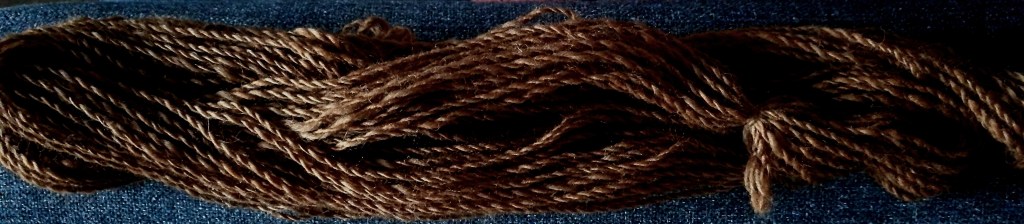
Photo credits: All photos (2022) Nicole DeRushie
Further Reading
Barber, Elizabeth W., Women’s Work : The First 20,000 Years : Women, Cloth and Society in Early Times (New York: New York : Norton, 1994)
Black, Naomi and Gail Cuthbert Brandt, Feminist Politics on the Farm: Rural Catholic Women in Southern Quebec and Southwestern France (Montreal: Montreal: McGill-Queen’s University Press, 2014)
Brown, Theodore M. and Elizabeth Fee, ‘Spinning for India’s Independence’, American Journal of Public Health (1971); Am J Public Health, 98 (2008), 39
Craig, Béatrice, Judith Rygiel and Elizabeth Turcotte, ‘The Homespun Paradox: Market-Oriented Production of Cloth in Eastern Canada in the Nineteenth Century’, Agricultural History, 76 (2002), 28-57
—‘Survival Or Adaptation? Domestic Rural Textile Production in Eastern Canada in the Later Nineteenth Century’, Agricultural History Review, 49 (2001), 140-171
Crowley, T., ‘Experience and Representation: Southern Ontario Farm Women and Agricultural Change, 1870-1914’, Agricultural History, 73 (1999), 238-251
Foty, Caroline, Fabricants De Rouets: Nineteenth Century Quebec Spinning Wheel Makers and Their Twentieth Century Heirs (1850-1950) A Provisional Directory, 3rd ed. (Online publication, 2018)
Hood, Adrienne D., ‘The Material World of Cloth: Production and use in Eighteenth-Century Rural Pennsylvania’, The William and Mary Quarterly, 53 (1996), 43-66
Inwood, Kris and Phyllis Wagg, ‘The Survival of Handloom Weaving in Rural Canada Circa 1870’, The Journal of Economic History; J.Eco.History, 53 (1993), 346-358
Lewis, Robert, ‘The Workplace and Economic Crisis: Canadian Textile Firms, 1929–1935’, Enterprise & Society; Enterp.Soc, 10 (2009), 498-528
Milliken, Emma, ‘Choosing between Corsets and Freedom: Native, Mixed-Blood, and White Wives of Laborers at Fort Nisqually, 1833-1860’, Pacific Northwest Quarterly, 96 (2005), 95-101
Muldrew, Craig, ”Th’Ancient Distaff’ and ‘Whirling Spindle’: Measuring the Contribution of Spinning to Household Earnings and the National Economy in England, 1550-1770′, The Economic History Review, 65 (2012), 498-526
Ommer, Rosemary E. and Nancy J. Turner, ‘Informal Rural Economies in History’, Labour (Halifax), 53 (2004), 127-157
Pacey, Arnold, Technology in World Civilization: A Thousand-Year History (Cambridge MA: The MIT Press, 1991)


Excellent and interesting. Reflecting a lot of my feelings and thoughts on spinning and whorls! I wonder if you could point me in the direction of origin of the approximate 1030 date of the spinning wheel as this is something that I’ve been trying to research on and off for AGES! Many thanks.
LikeLiked by 1 person
Thanks JB! Take a look at the Barber (1994) reading above, if you can get your hands on it. Full of fascinating information. I know there is considerable debate among historians as to which culture first invented the spinning wheel and when. The idea quoted above is from Pacey, Arnold (1991). Technology in World Civilization: A Thousand-Year History (First MIT Press paperback ed.). Cambridge MA: The MIT Press. pp. 23–24.
LikeLike
Thank you. I expect one day we’ll get a definitive answer! Until then we continue reading. I’ll see if I can track down that book. Many thanks for your prompt reply.
LikeLike